Pushover Integration Guide
Overview
Integrating Pushover with UptimeObserver allows you and your team to receive real-time alerts and status updates directly to your devices. This ensures that you and your team can quickly respond to downtime, latency issues, and other incidents affecting your websites or services.
Note
Pushover integration is available on all UptimeObserver plans.
Support
If you need help with this integration please reach out to us using the "Need Help?" button on the bottom right corner or send us an email at support@uptimeobserver.com.
Prerequisites
Before setting up this integration, you'll need:
- A Pushover account (sign up at pushover.net)
- The Pushover app installed on your device(s)
- Your Pushover User Key (found on your Pushover dashboard)
Step-by-Step Guide
- Go to UptimeObserver and log in to your account.
- Navigate to the Integrations section from your dashboard.
- Choose Pushover from the list of available integrations.
- Click on "Add Pushover User"
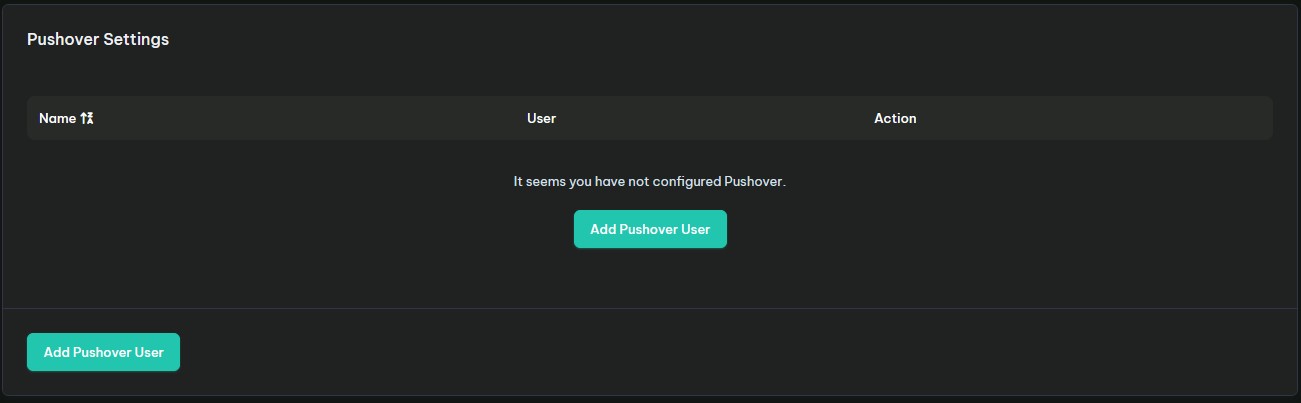
- Fill in the required fields:
- Friendly Name: A descriptive name for this configuration (e.g., "John's Phone" or "On-Call Device")
- User Key: Your Pushover User Key found on your Pushover dashboard
- Device (optional): Specify a particular device to receive notifications, or leave blank to send to all devices
- Click Save to create the integration.
- Test the integration by clicking the Test Button 🧪 next to your configuration.
Enabling Alerts on Monitors
After you have successfully integrated Pushover with your UptimeObserver account, you must manually assign which monitors should send alerts.
- Navigate to Monitors: From your dashboard, click on the specific monitor you wish to configure to enter its Monitor Detail page.
- Add Alert: Find the alerting section and click the Add Alert button.
- Select Alert Type: In the Alert Type dropdown menu, select Pushover.
- Choose the Event: Pick the relevant trigger from the Event dropdown (e.g., Monitor Down, Monitor Up).
- Select Configuration: Choose your Pushover configuration from the dropdown.
- Save Changes: Click the Save Changes button to activate the alert.
Recommendation
We recommend setting up alerts for both "Down" and "Up" events. This ensures you're notified immediately when an issue starts and when it has been resolved.
Troubleshooting
If you are having trouble receiving alerts or setting up the integration, check the common solutions below.
1. Test Button Failed or No Test Notification Received
If clicking the test button doesn't send a notification:
- Verify User Key: Double-check that your Pushover User Key is entered correctly. It should be a 30-character alphanumeric string
- Check Pushover app: Ensure the Pushover app is installed and you're logged in on your device
- Device specification: If you specified a device name, ensure it matches exactly (case-sensitive) with the device name in your Pushover account
- Pushover subscription: Verify your Pushover license is active (Pushover requires a one-time purchase per platform after the trial)
2. Not Receiving Notifications During Downtime
If test messages work but you don't receive incident alerts:
- Monitor assignment: Verify that Pushover is added as an alert on the specific monitor. Go to Monitor Detail → Alerts section
- Event selection: Ensure you selected the correct event type (e.g., "Monitor Down")
- Check Pushover app settings: Verify notifications aren't being filtered by quiet hours or priority settings in the Pushover app
3. Notifications Going to Wrong Device
If alerts arrive on unexpected devices:
- Device field: When adding the Pushover integration, specify the exact device name to limit notifications to that device
- Leave blank for all: If you want all devices to receive alerts, leave the Device field empty
- Find device names: Device names are listed in your Pushover account settings or in the Pushover app
4. Delayed Notifications
If notifications arrive late:
- Check device connectivity: Ensure your device has a stable internet connection
- Pushover priority: High-priority alerts may be delivered faster. Contact support if you need priority adjustments
- Check Pushover status: Visit Pushover's status page to check for any service issues
5. Quiet Hours Blocking Alerts
If you're not receiving alerts during certain times:
- Pushover Quiet Hours: Check your Pushover app settings—you may have quiet hours enabled that suppress notifications
- Emergency priority: Critical alerts can be configured to bypass quiet hours in Pushover (contact support for this option)
6. How to Reset the Integration
If all else fails, try a fresh start:
- Go to UptimeObserver → Integrations → Pushover
- Delete the existing Pushover configuration
- Follow the Step-by-Step Guide above to reconnect with a fresh User Key
How to Uninstall
In UptimeObserver:
- Go to UptimeObserver and log in to your account.
- Navigate to the Integrations section from your dashboard.
- Select Pushover from the list.
- Click the delete button next to the configuration you want to remove.
In Pushover:
No action is needed in Pushover—removing the integration from UptimeObserver stops all notifications.